
by Rev. David Howard
In observance of February as Black History Month, we often lift up well-known figures such as Harriet Tubman and Rosa Parks—women whose courage helped advance the cause of freedom for African Americans in this country. Their stories matter. And so do the stories of countless others whose names we may never know.
There are many heroes and heroines within the Black community—those who spoke, stood, fought, and died for freedom, equality, and justice. Yet I find myself thinking about the many unsung heroines: women who suffered indignities and hardships and who, day after day, continued to get up and show up for life, no matter how unfair it may have been.
I was born in Washington, Georgia, a town with the historical distinction of being the place where Jefferson Davis held his last cabinet meeting and voted to dissolve the Confederacy. Although much has changed since 1865, the legacy of discrimination and prejudice was clearly present in the 1960s and 1970s and, to some extent, remains today. While I did not grow up there, I spent a great deal of time in Washington with both sides of my family.
As a child, I often visited my maternal grandmother for weeks at a time during the summer. Every day, I walked to the city pool and stayed until closing. I loved to swim. It never occurred to me then that there were no Black children at that pool. They had their own pool on the other side of town. Eventually, rather than integrate, the city closed the pool and filled it with sand for a playground.
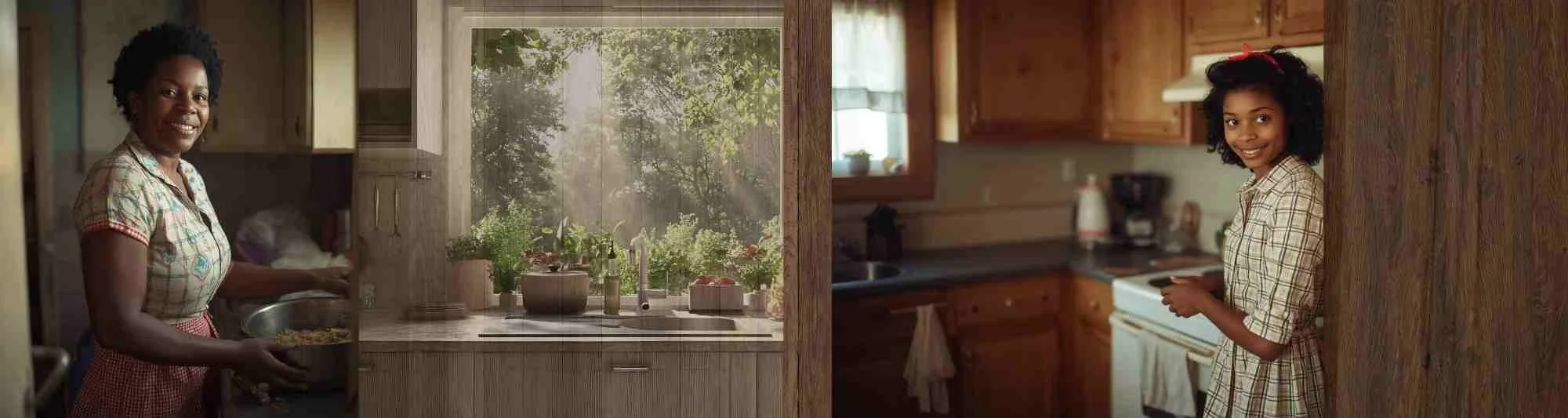
Sally was a Black woman who worked for my grandmother. I loved Sally. She was kind and warm and always greeted me with a smile and a hug. I did not understand why she could not stay and eat with us. Instead, someone drove her home each day to the other side of town, where she lived in a small, weathered house. She never had access to education or work that paid a living wage simply because she was a Black woman in the segregated South. Still, she showed up every morning, ready for another day’s work.
My paternal grandmother lived in a small rural community outside of Washington. A young Black woman named Ida Ree—whom everyone called “Fuzz”—lived with and worked for her. She came as a teenager and remained there until my grandmother’s death. Years later, I learned her mother could not afford to care for her and sent her there so she would at least have food and shelter.
When my cousins and I played games and left the pieces scattered, they were later neatly put away. When I left dirty clothes on the floor at night, they were washed and folded by morning. As a child, it felt like magic. As an adult, I understand that Ida Ree quietly labored behind the scenes, cleaning, cooking, gardening, walking the farm, and picking blackberries in the summer heat.
Though she was spoken of as “part of the family,” I now recognize that she was treated little better than an indentured servant. Her room was in the coldest, draftiest part of the house, furnished with a simple iron bed and a thin mattress, with bare wood floors and clapboard walls.
Sally and Ida Ree are just two of the countless unsung Black heroines who endured the cruelty and injustice of a society that judged and treated them as less than. I will never fully know what they experienced or the depth of their pain. I do know this: they persisted. They survived. They showed strength, dignity, and grace.
I honor them.
I thank them.
I remember them.
Their legacy lives on in all of us who were touched by their lives, their labor, and their love.
May their lives invite us to look more honestly at our shared history, more compassionately at one another, and more courageously at ourselves. May we listen for the untold stories, speak up when we witness injustice, and choose—each day—to live in ways that honor the dignity, worth, and humanity of all.
